

A key stage in reprocessing reusable instruments is ensuring they’ve been properly cleaned. If instruments are not cleaned correctly then blood, tissue and other matter can become trapped within joints, on surfaces and in hard to reach areas. An Ultrasonic Washer for Surgical Instruments uses high frequency sound waves to help clean instruments that are compatible by using a cleaning solution.
Hospitals, surgical centres and other healthcare facilities can use ultrasonic washing machines. However, it’s important to ensure the machine will work with your instruments. You should look at factors such as the tank size, cleaning features, safety features and maintenance requirements. Map Industries can provide more information on Sterilisation equipment and other relevant products. We’ll be able to confirm if your facility can utilise the correct ultrasonic machine.
What’s an Ultrasonic Washer for Surgical Instruments?
An ultrasonic washer utilises high frequency sound waves to produce micro bubbles within liquid. This is known as cavitation and helps to remove contaminants from surfaces of compatible instruments.
Ultrasonic washing is often used to clean complex instruments. However, care must be taken to ensure the instruments can be cleaned this way by checking the manufacturer’s instructions and the capabilities of your cleaning equipment.
Uses include:
- Hospitals – Cleaning compatible reusable surgical instruments.
- Surgical Centres – Help clean instruments.
- Central Sterile Services Departments (CSSD) – Help clean instruments using existing decontamination procedures.
- Specialist Healthcare Facilities – Help clean compatible instruments with complex surfaces.
However, it will not fully replace other cleaning stages and won’t sterilise instruments.
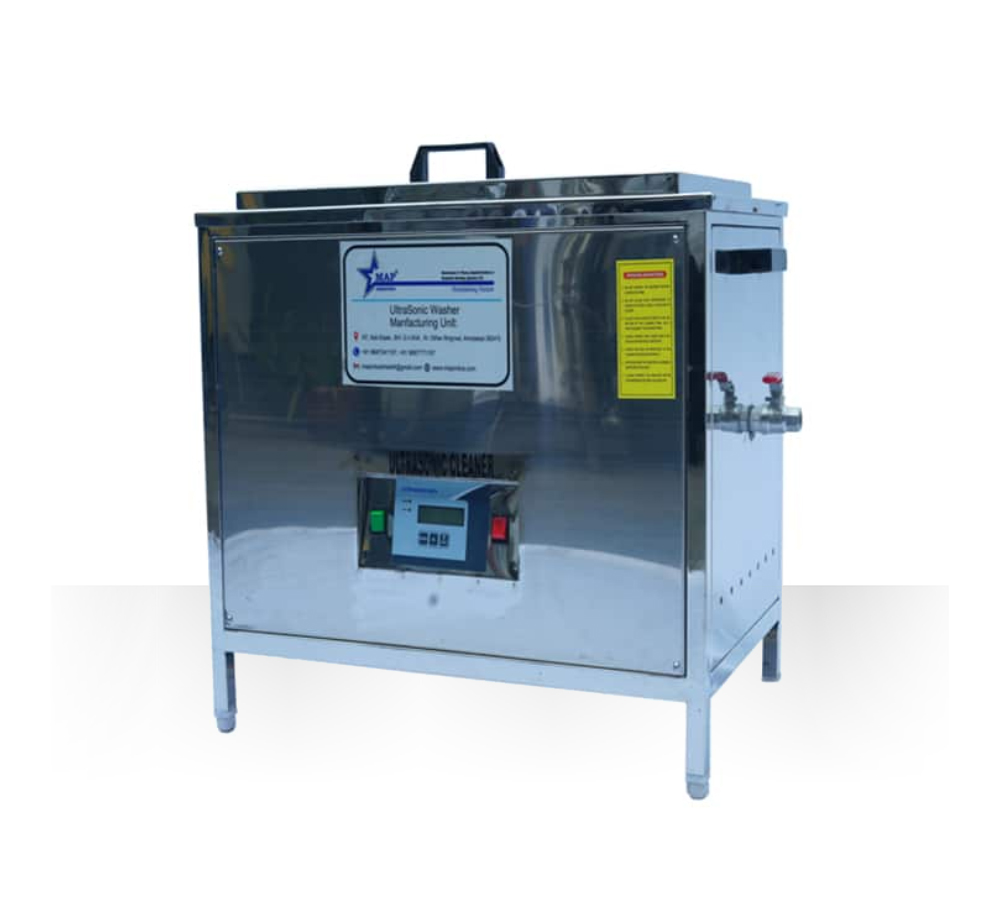
How Does It Work?
The ultrasonic cleaner makes use of cleaning agents, ultrasonic waves, and controlled environment to help clean the appropriate instruments.
Steps include:
- Preparing instruments – Ensure instruments are handled in line with infection prevention protocols and following the manufacturer’s instructions.
- Place compatible instruments inside the basket/rack.
- Fill the ultrasonic washer tank with the correct cleaning solution at the correct concentration and temperature.
- The transducers will produce high frequency sound waves causing cavitation bubbles to form in the liquid. This helps to loosen contaminants.
- Rinse the instruments.
- Inspect instruments and carry out any further reprocessing steps.
The process will depend on the instruments, cleaning solution, and machine used. The instructions of the manufacturer should be followed for proper handling of delicate instruments.
Benefits
Clean Hard to Reach Areas
Surgical instruments can have complex areas such as hinges, joints, serrated edges and tight areas. An ultrasonic washer can help clean compatible areas. This’ll vary depending on the design of the instrument, how they’re placed in the basket, the cleaning solution and conditions.
Standardise Cleaning
By using a controlled cleaning cycle, healthcare facilities can standardise parts of their cleaning process. By using set conditions and recording the steps taken, this can give more consistency. However, it’s important to ensure the instruments are placed correctly, the correct cleaning agents are used and regular checks are carried out.
Help to Remove Organic Matter
This process can be used as an aid in eliminating contaminants, such as blood and other organic materials. The selection of appropriate detergents and appropriate cleaning methods will help us get the desired results. The next step after the instruments have been cleaned is to check for any contaminants remaining on the instruments.
Help to Manage Complex Instruments
Using an ultrasonic washer for surgical instruments as part of a suitable process can help healthcare facilities manage complex instruments. The time taken to complete will depend on the cleaning cycle, the number of instruments, the type of instrument and any further processing. You should consider the whole reprocessing process.
Reduce Manual Cleaning
An ultrasonic washer can help with manual cleaning of compatible instruments. But it’s crucial that you ensure that you adhere to the right process of manual cleaning. Ensure that the instruments are handled as per the manufacturer's guidelines. A risk based approach using a suitable cleaning process for the instrument will ensure you choose the correct method.
Best Practice
- Read the Manufacturer’s Guide: There are some devices that are not suitable for the ultrasonic washer. It’s necessary to follow the guide and check whether the equipment is safe to wash.
- Use the Correct Cleaning Agent– It’s important to use the solution which was specifically designed for your equipment and instruments. Make sure that you’re familiar with the correct concentration, temperature, and timing. Using incorrect detergents or incorrect concentrations can impact the cleaning efficiency and cause damage to instruments and equipment.
- Don’t Overfill the Basket– Ensure instruments are arranged to allow the cleaning solution to reach the correct areas. Overfilling or stacking incorrectly could limit the flow of the solution and reduce the efficiency. Open any hinged instruments and take apart in line with the manufacturer’s instructions.
- Monitor Conditions– Ensure you follow the manufacturer’s instructions on what cycle to use. Ensure you monitor any relevant conditions such as temperature, cleaning time and solution. Record checks in line with your quality procedures.
- Rinse and inspect– Rinse the instruments as instructed. Ensure any detergent residue and loosened contaminants have been removed. Inspect under suitable lighting conditions. If there’s any remaining contamination, complete the correct cleaning process.
- Regular Maintenance– Ensure you clean the tank, change the cleaning solution at the correct intervals and inspect the baskets, lids etc. in line with manufacturer’s instructions. Regular maintenance and checks can help identify any issues with the equipment.
Factors to Consider
To ensure you select the right machine for your needs, consider the instruments you have, how much work you do and your reprocessing processes.
| Selection factor | What to evaluate |
|---|---|
| Tank capacity | Instrument dimensions, quantity and expected load size |
| Instrument compatibility | Approved cleaning methods for the instruments being processed |
| Ultrasonic performance | Operating frequency and cycle options specified by the manufacturer |
| Temperature control | Available settings and monitoring capabilities |
| Cycle management | Timer, operating controls and cycle indicators |
| Construction | Tank material, basket design and ease of cleaning |
| Safety | Electrical protection, lid design and operating instructions |
| Maintenance | Tank cleaning, component inspection and service requirements |
| Technical support | Installation, training, spare parts and after-sales service |
Before ordering, ensure you tell the supplier what instruments you have, what size of load you typically have and how many you expect to process. Ask for technical details on the machine to ensure it will meet your cleaning needs.
Ultrasonic Washers vs Manual Cleaning
Both methods can be used to clean instruments. However, it will depend on the instruments and approved process.
| Comparison factor | Ultrasonic Cleaning | Manual Cleaning |
|---|---|---|
| Cleaning method | Uses ultrasonic cavitation in a liquid | Uses appropriate brushes, detergents and manual techniques |
| Complex surfaces | Can help clean compatible joints and difficult-to-reach areas | Effectiveness depends on access, technique and suitable tools |
| Process control | Can use defined equipment settings and cycles | Depends on the approved procedure and operator technique |
| Instrument compatibility | Not suitable for every instrument | Must also follow instrument-specific instructions |
| Role in reprocessing | Supports cleaning for compatible instruments | Remains necessary where specified by the cleaning procedure |
Do not assume this’ll fully replace manual cleaning. Some instruments will require specific manual cleaning steps. Some devices may not be suitable. Ensure you follow the manufacturer’s instructions and approved reprocessing.
Why Choose Map Industries?
We are a manufacturer and supplier of sterilisation equipment based in Ahmedabad, Gujarat.
Questions to ask:
- Instrument Compatibility – Tell us what type of surgical instruments you have.
- Capacity – Tell us what size of load you have and what size your instruments are.
- Controls – Ask if control cycles, temperature and monitoring can be customized.
- Construction – Ensure tank is made from the correct material, can be cleaned and what maintenance is required.
- Technical Support – Ask about installation, training, servicing and spares.
Before ordering, ask for a technical quotation and product information. Ensure the machine will work with your instruments and approved cleaning processes.
FAQs - Frequently Asked Questions
This is a machine that uses high frequency sound waves to generate cavitation in a liquid solution. This helps in removing contaminants from surgical instruments that are compatible.
No. All it does is aid in removal of contaminants. Observe all necessary disinfection and sterilization protocols that are set.
Surgical instruments with joints and grooves can be washed. Make sure you refer to the manufacturer’s instructions on which instruments can be used.
Automation can help with processing, monitoring parameters, reducing manual intervention and providing consistent processes.
Conclusion
An ultrasonic washer can help clean compatible surgical instruments. Using cavitation can help to loosen contaminants from complex surfaces. The efficiency of this’ll depend on the correct instruments are chosen, using the correct cleaning solutions, correct cycles, correct loading and regular checks.
When choosing an Ultrasonic Washer for Surgical Instruments, ensure you consider the tank size, instrument compatibility, controls, maintenance and technical support. Contact Map Industries to confirm they can supply the correct equipment and what specifications we have. Choosing a machine that works with your reprocessing processes will help you achieve efficient cleaning prior to the required disinfecting and sterilising stages.