

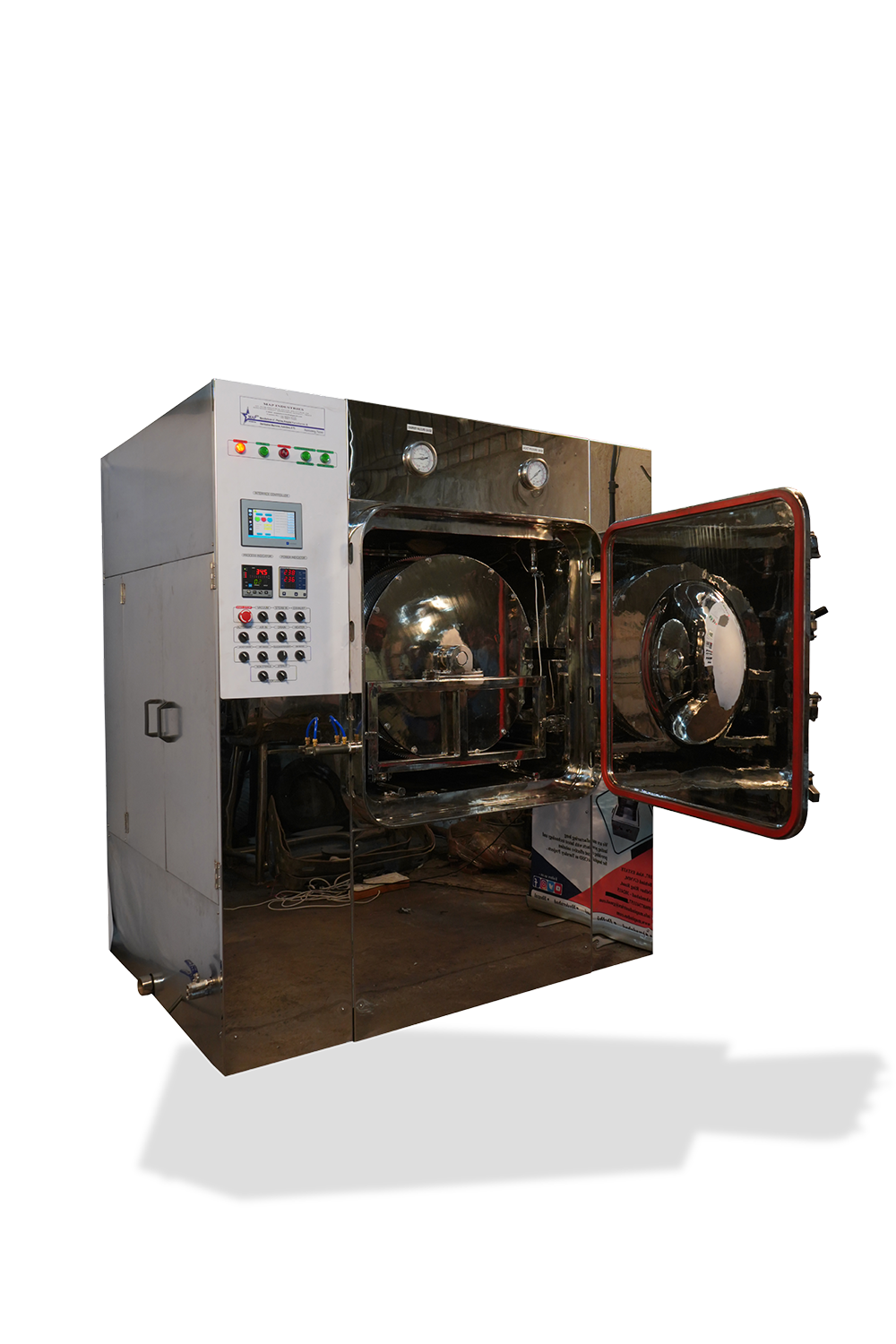
Having clean and sterile rubber bungs and closures is very important in pharmaceutical manufacturing. These can often be found sealing vials and other pharmaceutical items. A Bung Processor Cum Automatic Autoclave can help with this by having a processing function and a controlled autoclave function.
Before purchasing consider the processing capacity, automated functions, the control of temperature and pressure, and cleaning requirements. It’s important to ensure the correct equipment is chosen that’ll fit with your processes and quality standards.
With experience in manufacturing and exporting sterilization equipment, Map Industries offers solutions for pharmaceutical and other industrial applications.
What’s a Bung Processor Cum Automatic Autoclave?
A Bung Processor is used to process pharmaceutical rubber bungs/closures. This can have a washing/rinsing function to help with the cleaning of the bungs. This can be followed by a drying and autoclaving function.
Depending on the equipment, the processing functions will vary. You should therefore ensure that you know which functions are available, what parameters they can be validated at, and if they can be used with your bungs.
Key Features
1. Automated
Having an automated function means that multiple functions can be performed easily and efficiently. Ensure there are controls available to manage the processing cycles.
2. Sterilisation Control
It’s important to have accurate control over temperature, pressure and time. This will ensure you can easily control the processing function to achieve consistent results. It should also allow the correct sterilisation function to be used for your product.
3. Material Compatibility
Not all rubber bungs are the same. Ensure the equipment and processing cycles can be used with the bungs you have.
4. Processing Capacity
Ensure the equipment can handle the correct batch size. This will depend on how much you’re making, how many bungs you’re using per batch and how often you’re running the equipment. You should choose an equipment that can handle the amount of work you’re expecting.
5. User Friendly
Having an easy to use interface will make processing easier. Ensure the equipment has options such as programmable cycles, alerts and cycle tracking.
6. Easy to Clean
The equipment should be easy to clean, maintain and keep free from contamination. Consider what materials the equipment is made from, what finish it has, if there are drainage options, and how easy it’s to clean.
How Does It Work?
The processing functions will depend on the equipment and what’s required by your pharmaceutical facility. The general steps to complete will be:
Load the rubber bungs according to the manufacturer’s instructions. Load the bungs according to the batch setup.
- Washing/Rinsing: If the equipment has this function then it will wash/rinse the bungs.
- Draining/Drying: Any excess liquid will be drained off. If drying is required then this will be performed.
- Autoclaving: The equipment will run the desired cycle.
- Monitoring: The equipment will monitor the correct parameters.
- Unloading: Once the cycle has been completed and the parameters have been met, the bungs will be unloaded and handled according to your facility’s processes.
This will depend on the equipment and the functions available. Ensure you know what the equipment can do and what parameters it can be validated at.
Considerations
In selecting the Bung Processor Cum Automatic Autoclave, it is more than simply evaluating the cost of purchase. Below are some important criteria that need to be considered when looking for the appropriate choice for the facility.
| Selection Criteria | What to Consider |
|---|---|
| Processing Capacity | Batch size, daily output requirement, and cycle time |
| Automation | Programmable cycles, alarm systems, monitoring, and documentation |
| Sterilization Process | Process type and compatibility with required sterilization parameters |
| Compatibility with Bungs | Material compatibility, size, and load configuration |
| Construction | Material construction, surface finish, drainage, and ease of cleaning |
| Installation | Available space, utility requirements, and facility layout |
| Documentation | Operating manuals and technical documentation |
| Maintenance | Access for servicing, spare parts availability, and preventive maintenance requirements |
| Regulatory and Quality Requirements | Compliance with the facility’s GMP and quality requirements |
| Total Cost | Overall cost, including purchase, installation, utilities, and maintenance |
Validation and Documentation
During the production of pharmaceuticals, it’s imperative that the machinery is able to operate effectively. Inquire from the supplier on their documentation for installation, operational and performance qualification. It’s the responsibility of the facility to ensure that the cycle can consistently be done with the right results.
Installation and Support
Make sure that you’re aware of the size of the machine, the utilities needed, the installation requirements, the training needed, the warranty, and technical support. This will help determine the time and effort involved in having the machine set up and ready.
Why Choose Map Industries?
Choosing an equipment supplier for the pharmaceutical industry is not just about looking at costs. Other factors that need to be taken into account are experience in manufacturing, quality of products, customizability, and after-sales support.
Map Industries, founded in the year 2000, produces and exports sterilization equipment from Ahmedabad, Gujarat.
Make sure that the supplier is able to comprehend your process requirements and is able to give you technical information. You can contact us to discuss what batch size you require, what bung materials/sizes you’ll be using, what processing you require, how much automation you want, what the installation requirements are and what documentation you require. Ask for technical specifications and what support is available.
FAQs - Frequently Asked Questions
The equipment is used to process pharmaceutical rubber bungs/closures. The functions will depend on the equipment.
Consider processing capacity, automation, cycle monitoring, bung compatibility, equipment, cleaning requirements, documentation and technical support.
It will depend on the materials, size, loading and processing parameters. Please confirm with the manufacturer.
Automation can help with processing, monitoring parameters, reducing manual intervention and providing consistent processes.
Conclusion
When choosing a Bung Processor Cum Automatic Autoclave you should consider processing capacity, automation, bung compatibility, sterilisation control, easy to clean and documentation. The equipment should fit with your processing and provide consistent processing with the correct pharmaceutical quality requirements.
Ensure you compare technical specifications, what functions are available and what validation and maintenance requirements there are. Contact Map Industries to discuss.