

Hospitals process reusable instruments, dressings, trays and other medical supplies on a daily basis. These materials should undergo proper cleaning and sterilisation procedures before reuse. A badly organised process can result in delayed staff, incomplete records and increased pressure on central sterile supply department. With the right equipment, hospitals can perform these jobs more efficiently.
A Horizontal Automatic Cylindrical Autoclave uses controlled steam cycles to sterilize compatible items in a sterilized environment. Automatic controls allow for the monitoring of the critical stages of the cycle and minimize the need for frequent manual intervention. If properly chosen for the workload of the facility and operated appropriately, this piece of equipment could improve sterilization procedures.
Understanding the Role of Automatic Autoclaves
The hospital sterilization is a process that can be broken down into many steps such as cleaning, checking, packing and using the autoclave. The process as a whole relies on the people, machinery and processes all working together.
A horizontal cylindrical chamber is used to load items. The unit may also have programmable controls, pressure monitoring and safety interlock mechanisms, plus vacuum or drying functions depending on the unit. This allows operators to carry out the chosen cycle and monitor the progress of the cycle.
How Automation Improves Daily Work
Consistent Cycle Management
Automatic controls will control the settings like temperature, pressure, and exposure time based on the program selected. This allows for repeatability of the process after validation of the program for the load. It is also necessary for the operators to choose the appropriate program and ensure completion of the process.
Better Monitoring and Documentation
Modern systems may display operating values, cycle stages, and alarms. Some models can also generate cycle reports. These records help the authorized person to check the processing history, diagnose issues, and document everything.
Support for Drying
Some autoclaves use vacuum pulsing and drying to help remove air and moisture during appropriate cycles. Proper drying matters because wet packaging can compromise the maintenance of sterile items. The cycle must suit the load, packaging, and sterilizer design.
Improved Load Handling
Horizontal loading will be useful to allow staff to select appropriate baskets and trays to load into the autoclave. In case loads are properly placed, the staff will be able to develop an expected loading and unloading procedure. Overloading is discouraged since it may hamper process efficiency.
Features Hospitals Should Evaluate
Before choosing a machine, hospital managers should review several practical points:
- Chamber capacity and daily processing volume.
- Programmable controls and available sterilization cycles.
- Temperature and pressure monitoring.
- Door interlocks and pressure safety devices.
- Vacuum and drying functions, where required.
- Cycle reporting, maintenance access, and technical support.
The chosen equipment must be suitable for the hospital’s instrument, packing systems, installation place, and validation process. Buyers should also check for proper training and service of the equipment before its commissioning.
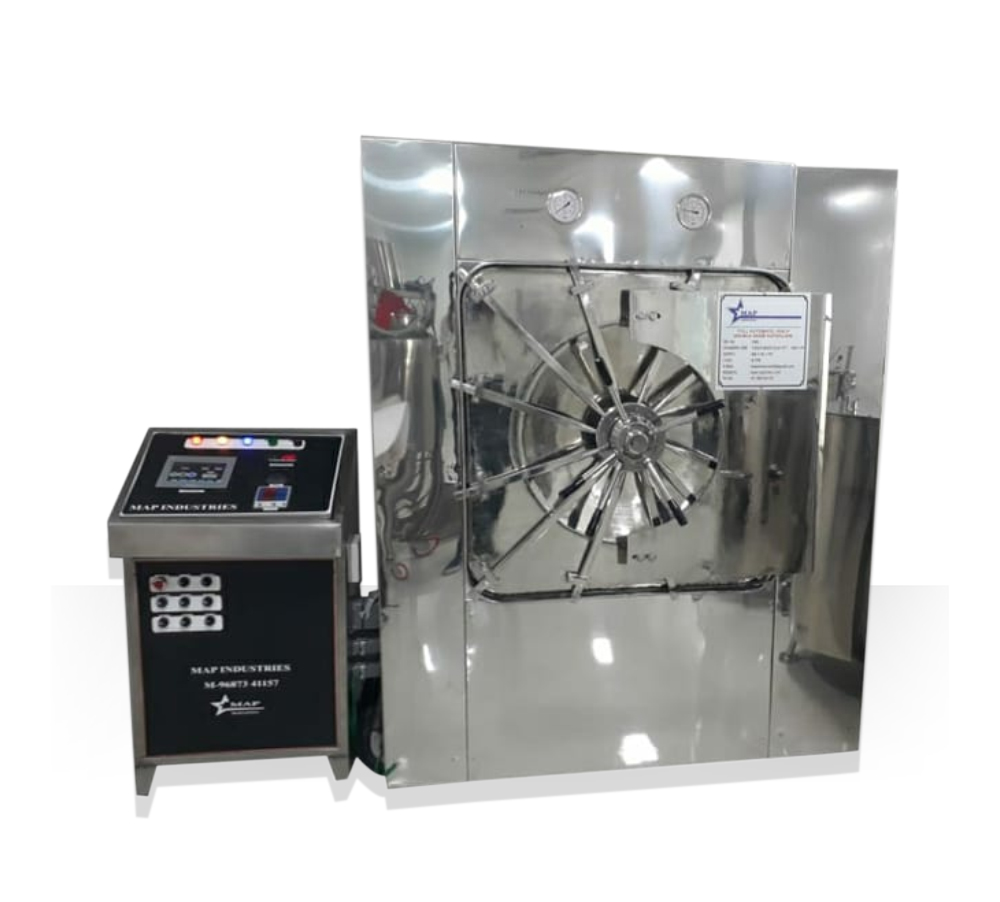
Choosing the Right Equipment for Your Hospital
Map Industries manufactures horizontal cylindrical as well as rectangular autoclaves, for use in medical facilities and other institutions. The company publishes the technical data on their product with regards to the control systems, vacuum system, safety aspects, and cycle options offered in each machine.
When comparing a Horizontal Automatic Cylindrical Autoclave, the hospitals should be provided with all the details in order to know the capacity of the chamber, the cycles offered, and the installation aspects of the machine.
Maintaining a Reliable Sterilization Workflow
Good workflow depends on more than automation. Instruments need to be cleaned in a proper way, inspected, loaded appropriately, and instructions from the manufacturer need to be followed. Chemical, biological, and mechanical monitoring has to be done based on the relevant standards and hospital policy.
Regular inspection and maintenance will ensure that the equipment works effectively. Unusual results, failed cycles, leaks, or alarms need to be reported promptly. Load needs to wait for the completion of necessary inspections before being released.
To increase the efficiency of hospitals, separation of contaminated and clean areas, scheduling of loads, operator training, and record keeping can prove to be effective measures.
Conclusion
Horizontal Automatic Cylindrical Autoclave can help hospitals perform sterilization process in a controlled cycle and monitoring system along with appropriate loading system. However the right results depends on proper training and maintenance. Facilities must consider all these factors when selecting equipment for their needs.
Map Industries provides autoclave systems based on specific needs of the health care establishments for sterilization purposes. An analysis of the available models and their applications would assist customers to select wisely.
FAQs
This is a steamer that has a horizontally positioned cylinder.
Automation helps in controlling cycles and process monitoring.
It could be used to dry off the moisture in appropriate sterilization cycles.
Not all. Read the instruction by the equipment manufacturer.
Correct loading, staff training, monitoring, and maintenance.
Contact Map Industries to discuss autoclave models and specifications for your hospital’s sterilization requirements.